Food as Medicine: How to Eat for Better Blood Sugar in Wyandanch | Wyandanch Pharmacy
If I had to name one thing that makes diabetes management harder than it sounds, it would be this:
Most advice assumes I have easy access to perfect food choices all the time.
That is not how real life works in every neighborhood. In places where fresh food is harder to find, budgets are tight, and convenience often wins because it has to, “eat better” can sound more like judgment than help. The CDC says adults experiencing food insecurity are 2 to 3 times more likely to have type 2 diabetes, and it notes that cheaper, easier-to-find foods are often higher in added sugars, saturated fat, and sodium.
That is why I think “food as medicine” only works when it starts with reality. For people looking for Diabetes care in Wyandanch, healthy eating 11798, or glucose monitoring support, the goal is not a perfect diet. It is a better pattern that fits the food I can actually get, afford, prepare, and stick with. The ADA says all foods affect blood glucose, but some affect it more than others, and it recommends practical meal-planning tools like the Diabetes Plate Method rather than one rigid eating plan.
Why does blood sugar management feel harder when food access is limited?
A lot of diabetes advice is built around ideal grocery shopping habits.
But the reality in many communities is that healthier food can cost more, require more prep time, spoil faster, or simply be harder to get consistently. The CDC says nutritious foods may be too expensive for some people and that this limits healthy food choices, while the U.S. Office of Disease Prevention and Health Promotion notes that neighborhoods with fewer fresh produce sources and more convenience-heavy food environments are linked to a higher risk of obesity and diabetes.
That is why I do not think better blood sugar starts with guilt. It starts with smarter choices inside the reality I have.
Food as medicine does not mean eating perfectly
This is the first mindset shift I want to make clear.
“Food as medicine” does not mean every meal has to be organic, low-carb, meal-prepped, and Instagram-ready. The ADA’s diabetes nutrition guidance says the most effective meal patterns are the ones people can actually maintain over time, and Endotext’s 2024 dietary guidance emphasizes that diabetes nutrition should be individualized and cannot be delivered as a one-size-fits-all handout.
So if I am trying to improve blood sugar in Wyandanch, I do not ask:
“How do I eat like a wellness influencer?”
I ask:
“How do I make my next grocery run and my next three meals work a little better for my blood sugar?”
That question is much more useful.
The simplest place to start: understand what raises blood sugar fastest
The ADA says all foods affect blood glucose, but foods high in simple carbohydrates can have a bigger impact. The CDC’s healthy-eating materials also point people toward carb counting, plate planning, and portion awareness as practical tools.
That means the easiest place for me to start is not panic-cutting every carb. It is noticing which foods hit hardest and which meals leave me feeling steadier.
Foods that often raise blood sugar faster include:
sugary drinks
pastries and sweet snacks
oversized rice or pasta portions
white bread-heavy meals
chips and highly processed snack foods
That does not mean I can never eat them. It means I want to stop building my whole day around them.
The Diabetes Plate Method works because it is realistic
One of the best practical tools for healthy eating 11798-style advice is the ADA’s Diabetes Plate Method.
The ADA recommends using a 9-inch plate and filling:
half with non-starchy vegetables,
one-quarter with lean protein,
one-quarter with quality carbs like beans, grains, fruit, or starchy vegetables.
I like this method because it does not require me to memorize complicated formulas. It lets me work with what I have.
If dinner is rice and chicken, I do not need to ban the rice. I may just need:
less rice,
more non-starchy vegetables if available,
and a better balance on the plate.
That is a realistic upgrade, not a total food identity crisis.
What if fresh food access is inconsistent?
This is where a lot of standard advice falls apart, so I want to stay practical.
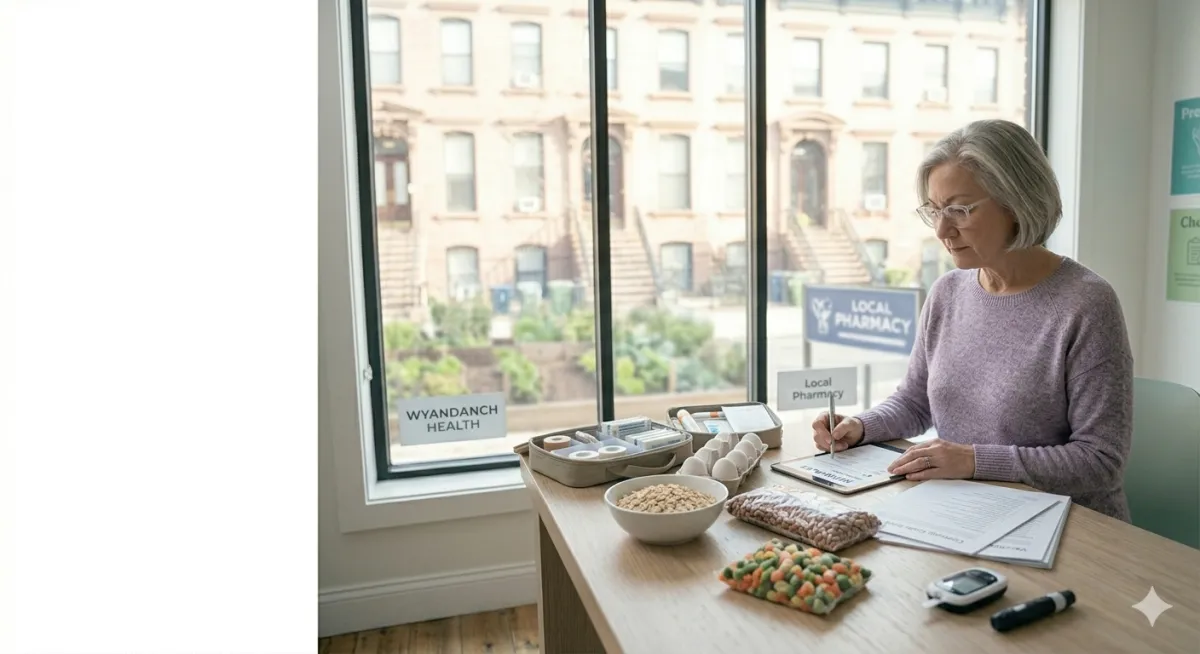
If fresh vegetables are not always easy to get, that does not mean I am out of options. “Food as medicine” can still work with:
frozen vegetables,
canned vegetables with lower sodium when possible,
beans,
eggs,
plain oats,
peanut butter,
canned tuna or salmon,
low-sugar yogurt if affordable,
brown rice or other higher-fiber staples when accessible.
The ADA’s broader food-and-nutrition approach is about meal patterns that support blood sugar management, not about a narrow list of “perfect” foods.
So if I cannot build every meal around expensive fresh produce, I can still improve my pattern by choosing:
more fiber,
more protein,
less liquid sugar,
and fewer meals built entirely around refined carbs.
The best blood sugar meal is often the more balanced one, not the more expensive one
A lot of people assume diabetes-friendly eating is automatically expensive.
Sometimes it can be. But not every improvement costs more.
For example:
adding eggs to breakfast may keep me steadier than sweet cereal alone,
using beans as part of a meal can stretch the budget and improve fiber,
swapping soda for water removes one of the fastest blood-sugar spikes,
making a sandwich smaller and adding a side of something higher in protein or fiber can help more than buying specialty “diabetic” products.
The CDC’s healthy-eating guidance focuses on planning, portioning, and understanding carbs rather than expensive branded products.
That matters because I do not need premium food marketing. I need patterns that lower blood sugar chaos.
Why does glucose monitoring matter so much here?
Food advice works better when I can actually see what my body is doing.
The ADA says blood glucose monitoring is the primary tool for finding out whether my levels are within target range.
That is why glucose monitoring matters so much in this conversation. If I am trying to eat better in a neighborhood where choices may be limited, checking my glucose can help me answer questions like:
Did that breakfast keep me stable or spike me?
Does that takeout meal hit harder than I thought?
Which snacks actually work for me?
Am I doing better with smaller portions?
Without some form of monitoring, I am often guessing.
Food insecurity changes diabetes management, not just diet
This is one of the most important truths in the whole article.
Food insecurity does not only affect what is on the plate. It affects medication timing, meal consistency, stress, and blood sugar swings. The CDC says food insecurity is linked to a higher risk of type 2 diabetes, and community health reporting on Long Island notes that financial stress makes it harder for people to afford nutritious foods, which worsens chronic disease management.
That means diabetes care in Wyandanch has to be honest about the bigger picture.
If I am skipping meals because money is tight, grabbing processed foods because they are the fastest option, or eating irregularly because life is chaotic, that is not a willpower problem. That is a real diabetes-management barrier.
Local support matters more than generic advice
This is where community-based help becomes important.
Wyandanch does have food-support resources. Community Solidarity’s Wyandanch Food Share says it provides free produce and vegetarian groceries every Saturday in Wyandanch, with no paperwork or ID required. The Diabetes Resource Coalition of Long Island also exists specifically to connect Long Island residents to diabetes awareness and support resources.
That matters because “eat better” becomes more actionable when I actually know where local support exists.
So, for someone focused on Diabetes care in Wyandanch, it is worth thinking in layers:
what I can improve at home,
what I can monitor,
and what local food or diabetes resources can help fill gaps.
What I would focus on first if I wanted better blood sugar without overhauling everything?
If I were starting today, I would keep it simple.
I would focus on five changes:
1. Cut the liquid sugar first
Sweetened drinks can raise blood sugar fast. Replacing soda or sugary juice more often is one of the clearest wins.
2. Add protein or fiber to meals that are mostly carbs
Oatmeal with peanut butter beats oatmeal alone. Rice with beans or chicken beats rice alone.
3. Use the plate method when I can
Even if the meal is simple, balancing the plate helps.
4. Keep one or two steadier, repeatable breakfasts or lunches
Routine meals make diabetes management easier.
5. Monitor glucose if I have access to it
Because numbers teach me faster than guessing.
The ADA and CDC both support this kind of practical, repeatable approach through meal planning, carb awareness, and glucose monitoring.
Why a local pharmacy can still be part of the answer?
A pharmacy cannot fix food insecurity by itself.
But a local pharmacy can still matter a lot in diabetes care by helping with:
medication access,
glucose monitoring support,
supplies,
practical questions,
and connecting the dots between what I eat and what my numbers show.
That is why a local, community-based option matters when I think about Diabetes care in Wyandanch rather than just generic diabetes advice.
Final thoughts
Food as medicine only works when it respects reality.
If I am managing diabetes in Wyandanch, better blood sugar does not start with perfection. It starts with making my meals a little more balanced, understanding which foods affect me most, using glucose monitoring when possible, and getting support instead of trying to solve everything through shame or extreme restriction.
The CDC, ADA, and other public-health sources all point in the same direction: food insecurity makes diabetes harder, blood sugar responds to food choices, and practical meal-planning tools really do help.
That means “food as medicine” in 11798 should not sound like luxury advice.
It should sound like this:
Use what you have, improve what you can, monitor what matters, and build a pattern you can actually keep.
